
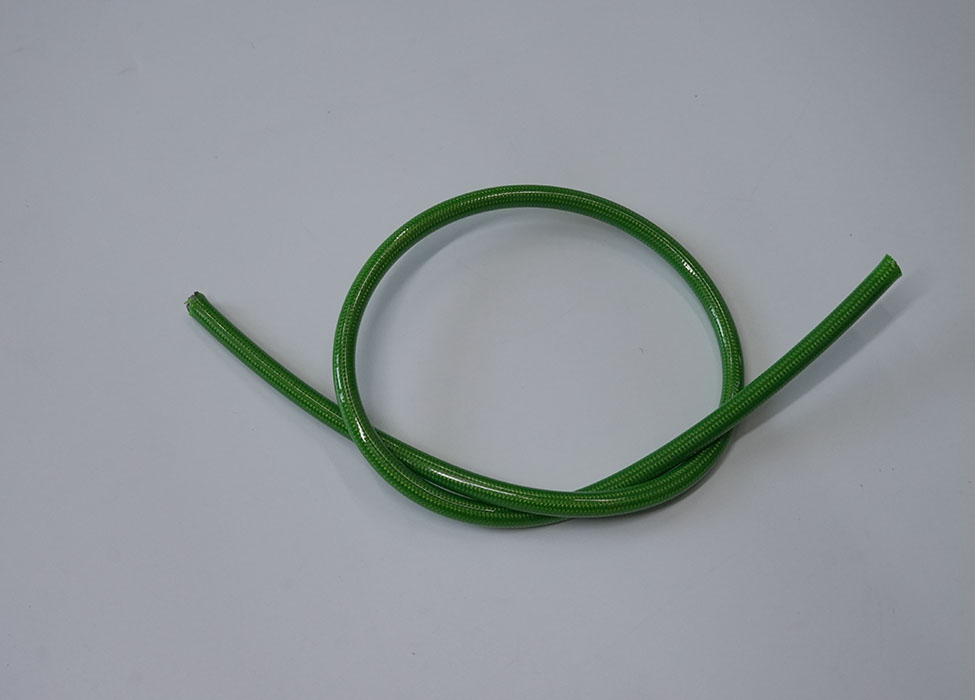
Nylon Brake Hose — Engineering Guide & Buyer Checklist for Aftermarket Applications
Make A Call
+8618903185773
Email Address
nina@brakelinefactory.com
Nylon Brake Hose — Engineering Guide & Buyer Checklist for Aftermarket Applications
As a manufacturer of aftermarket brake hoses, you want product content that ranks on Google and converts procurement visits into inquiries. This engineering-focused guide explains why many tuners, distributors and automotive parts buyers choose nylon brake hose assemblies, how these hoses are constructed, the performance trade-offs versus alternatives, and the exact specification and QC items buyers search for when sourcing nylon brake lines or performance brake hose kits.
What is a Nylon Brake Hose Assembly?
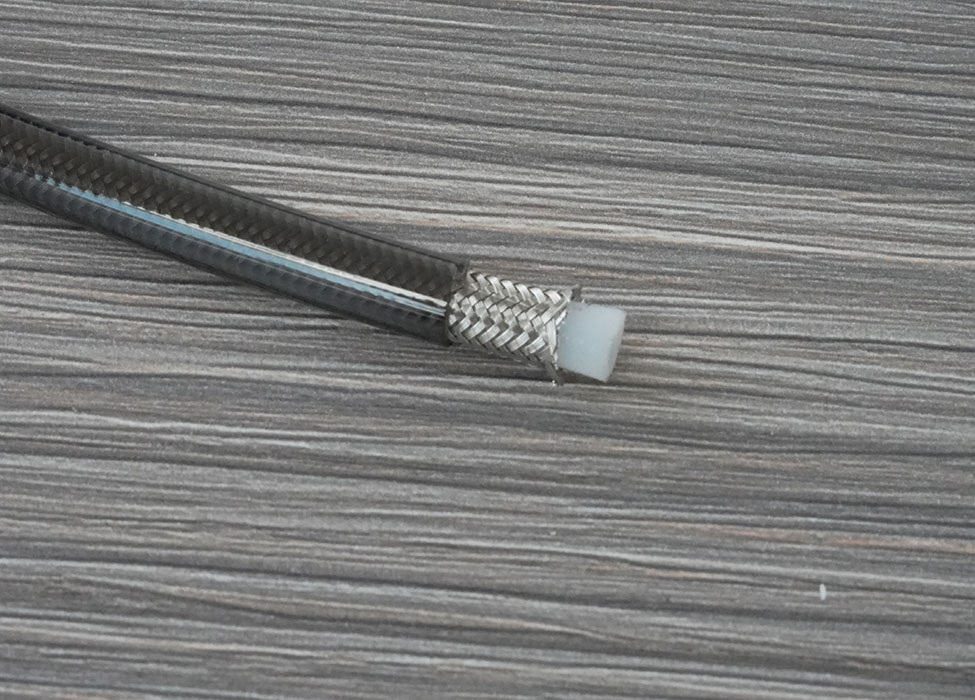
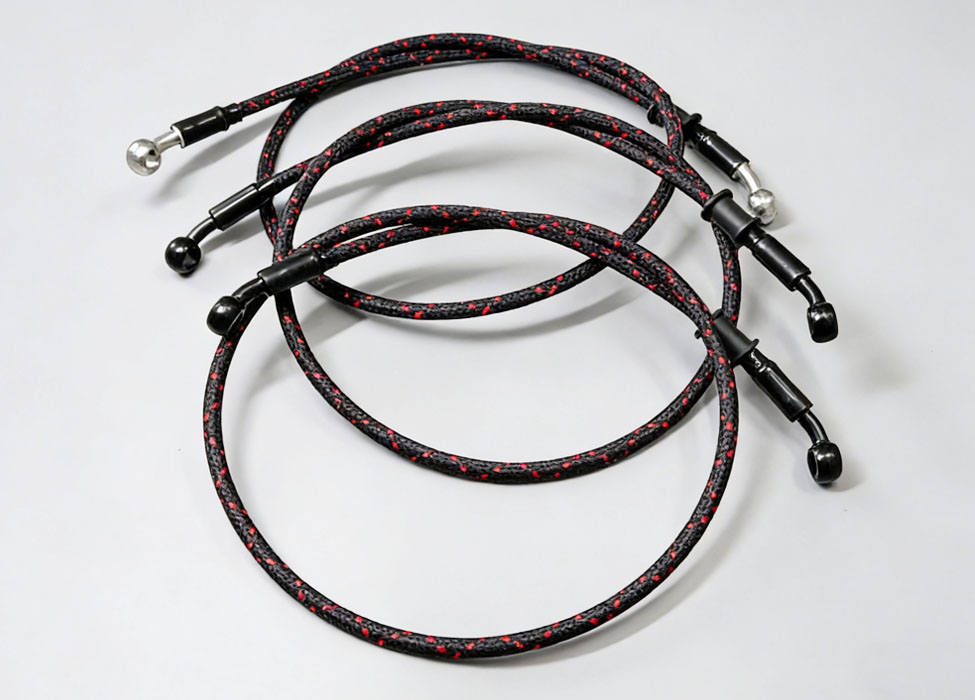
A nylon brake hose assembly is a ready-to-install hydraulic brake line built with an inner fluid-compatible tube, one or more nylon reinforcement layers (or nylon outer jacket), and end fittings (banjo, AN, or metric). Unlike PTFE-lined stainless-braid assemblies used heavily in motorsport, nylon-reinforced hoses offer a balance of durability, abrasion resistance and cost-effectiveness—making them popular for many OEM-equivalent and aftermarket replacements.
Typical components
- Inner tube (compatible with DOT3 / DOT4 brake fluids)
- Nylon reinforcement layer(s) or nylon braided jacket
- Protective outer jacket (PVC / nylon / heat-shrink)
- End fittings: banjo, AN, metric (crimped or swaged)
- Optional sleeving or stainless outer braid for increased abrasion protection
Key Engineering Advantages
1. Abrasion & Chafe Resistance
Nylon outer layers provide superior resistance to rubbing and road debris compared with unprotected rubber hoses. For off-road and modified vehicles where routing exposes lines to contact, nylon reinforcement reduces the risk of external damage.
2. Lightweight & Flexibility
Nylon constructions can be lighter than stainless-braided PTFE assemblies while still offering good tensile strength and flexibility for tight routing on modified cars and motorcycles.
3. Cost Efficiency for Aftermarket Kits
Nylon brake hose assemblies typically cost less to produce than full PTFE + stainless-braid systems. For distributors seeking competitive pricing or bulk supply, nylon kits often provide the best value / performance ratio.
4. Good Chemical Compatibility
When paired with the correct inner tube material, nylon-reinforced hoses are compatible with common brake fluids (DOT3, DOT4). Always confirm inner tube chemistry during supplier evaluation.
Performance & Specification Items Buyers Search For
Procurement teams and engineers commonly include these terms in RFQs and Google searches: nylon brake hose assembly, buy nylon brake hose, bulk nylon brake hose supplier, AN fittings, banjo fittings. Make these specs prominent on product pages.
| Specification | Typical Value / Note |
|---|---|
| Burst pressure | Manufacturer-specified, commonly ≥ 3,000–8,000 psi depending on design |
| Working pressure | Rated continuous pressure (see product datasheet) |
| Temperature range | e.g., -40°C to +120°C (dependent on inner tube) |
| Fluid compatibility | DOT3 / DOT4 (verify inner tube material) |
| Fitting options | Banjo, AN, metric (M10/M12 common), custom adapters available |
| Length tolerance | ± specified mm — important for pre-formed assemblies |
Applications & Use Cases
Nylon brake lines are commonly used across:
- Passenger cars and light commercial vehicles (OEM-replacement & aftermarket)
- Motorcycles and scooters (lightweight routing advantage)
- Modified street cars where abrasion resistance is required
- Off-road vehicles subject to stone strikes and chafing
- Bulk supply to distributors seeking cost-effective brake hose kits
Customization Options That Buyers Want
Buyers searching terms such as custom brake line manufacturer or buy nylon brake hose assembly expect configurable options. List these clearly on your pages:
Common configurable features
- Exact hose length & pre-formed routing for drop-in fitment
- Choice of fittings: banjo (caliper), AN (performance plumbing), metric OEM threads
- Optional protective sleeving (PTFE, nylon, stainless braid)
- Color jackets, printed part numbers, and private-label packaging
- Kit-level packaging with installation instructions and torque specs
Installation & Maintenance Notes
Installation best practices
- Avoid sharp bends and torsion; follow minimum bend radius for specified hose
- Torque banjo bolts to OEM spec and replace crush washers when required
- Bleed the hydraulic system thoroughly after installation to remove air
Inspection & service intervals
Recommend visual inspection every 6–12 months or after heavy off-road/track use. Check for abrasion, chafe, corrosion at fittings and any signs of fluid seepage.
Feel Free to Contact Us, Get In Touch
We're here to assist you in any way we can. Whether you have questions, feedback, or just want to say hello
Location
Hengshui City, Hebei, China.
Email Address
nina@brakelinefactory.com
Make A Call
+8618903185773
Common problems with brake line
Based on inquiries from most of our clients, we have compiled some important points to note when purchasing brake line materials. We hope this information will be helpful to you.
Contact UsThe length, interface specifications, and bending angle of brake oil pipes vary greatly among different vehicle models, and it is necessary to choose a product that fully matches the vehicle year, displacement, and chassis model.
Made of cold-rolled seamless steel pipes, some of the outer layers are plated with copper, zinc, or spray painted to enhance their anti-corrosion and rust prevention capabilities. Family sedan SUV、 The original brake pipeline layout of commercial vehicles (mainly used for chassis fixed road sections).
Structure: The inner layer is nitrile rubber (NBR) that is resistant to brake fluid, the middle layer is a multi-layer fiber woven reinforcement layer, and the outer layer is a wear-resistant and weather resistant rubber sheath. Suitable for the connection between wheels and chassis hard pipes, it is an essential flexible component for all vehicle braking systems.
Applicable scenarios: Performance car modification, track use, off-road vehicle upgrade, preferred by car owners who pursue ultimate braking performance.
We provide free samples of our brake line for evaluation. Production orders for cooling brake line generally ship within 7–15 days after confirmation.
Appearance inspection, brake system performance, regular replacement according to time/mileage.
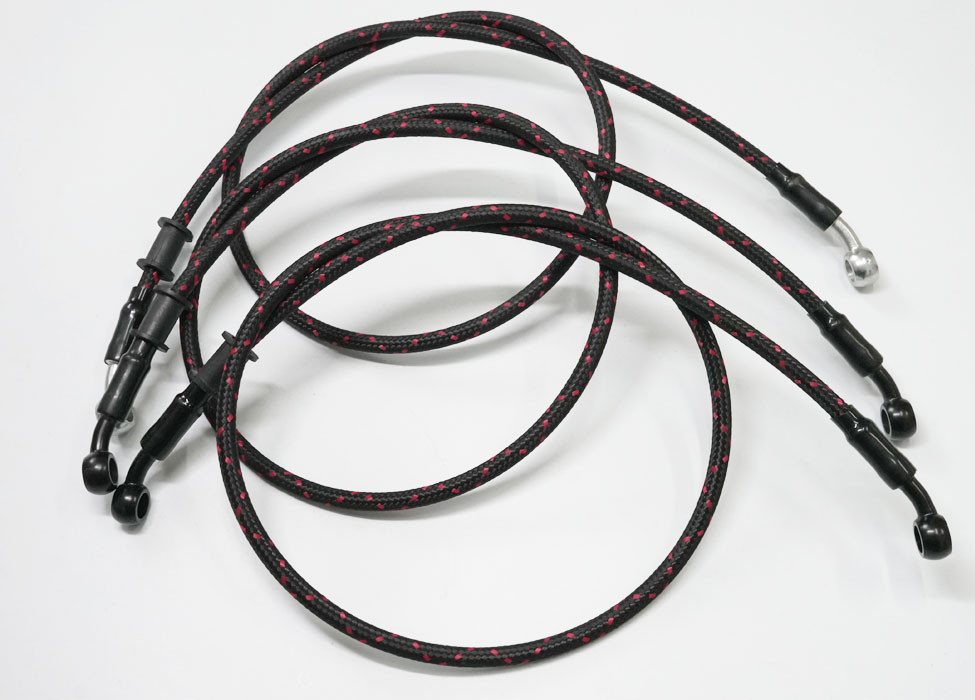
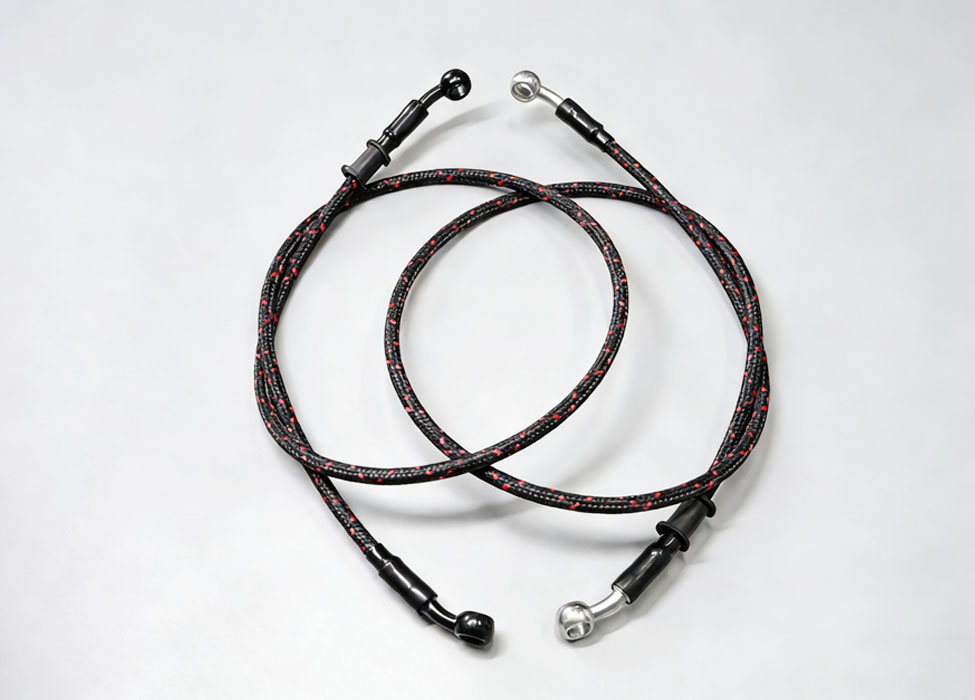
Brake Line Brake Line User Experience
After replacing the AnTu brake oil pipe, the driving safety is directly upgraded! The virtual position and hysteresis of the original rubber tube have completely disappeared, the foot feel is solid and precise, and the braking force is responsive to stepping on it. Even when running continuously on mountain roads, there is no attenuation in braking. The anti-corrosion and scratch resistant characteristics allow me to no longer worry about oil pipe aging and leakage. This upgrade is worth it, strongly recommended for car enthusiasts who pursue handling and safety!
Don't worry about using the Antu brake oil pipe!
I used to worry about the aging and leakage of the oil pipe, but after replacing the AnTu brake oil pipe, I completely feel at ease! Fast brake response, short pedal travel, no thermal degradation during continuous downhill braking, corrosion and scratch resistance, almost no maintenance required for daily use, dual improvement in safety and handling, highly recommended!
The AnTu brake oil pipe is my best modification!
As a mountain running enthusiast, changing the AnTu brake oil pipe was my best modification! The original rubber oil pipe is prone to expansion at high temperatures, and the foot feels increasingly soft after continuous braking, always afraid of not being able to stop. The new oil pipe completely solves this problem. The pedal is solid without any virtual position, the braking force transmission is zero loss, the foot feel is still stable after high-intensity braking, the joint is tightly sealed, and there has been no oil leakage for two years. This durability is too worry free, and car enthusiasts who pursue safety and handling should close their eyes!
Antu brake oil pipe is too surprising!
Antu brake oil pipe is absolutely amazing! The pedal feel is firm and precise, offering smooth braking for light inputs and powerful braking for heavy inputs. It remains stable even under high-intensity braking during track days, with exceptional durability. No need to hesitate if you're demanding on your brakes!