
Complete Guide to PTFE (Teflon) Stainless-Braided Brake Hoses
Overview: This guide outlines the construction, functional advantages and practical procurement/installation considerations for PTFE (Teflon) stainless-braided brake hoses. Written in an engineer’s voice, the content targets distributors, fleet buyers and performance shops looking to specify or buy PTFE brake lines with confidence.
Material system and functional principles
PTFE inner liner: hydraulic stability and chemical resistance
What PTFE provides
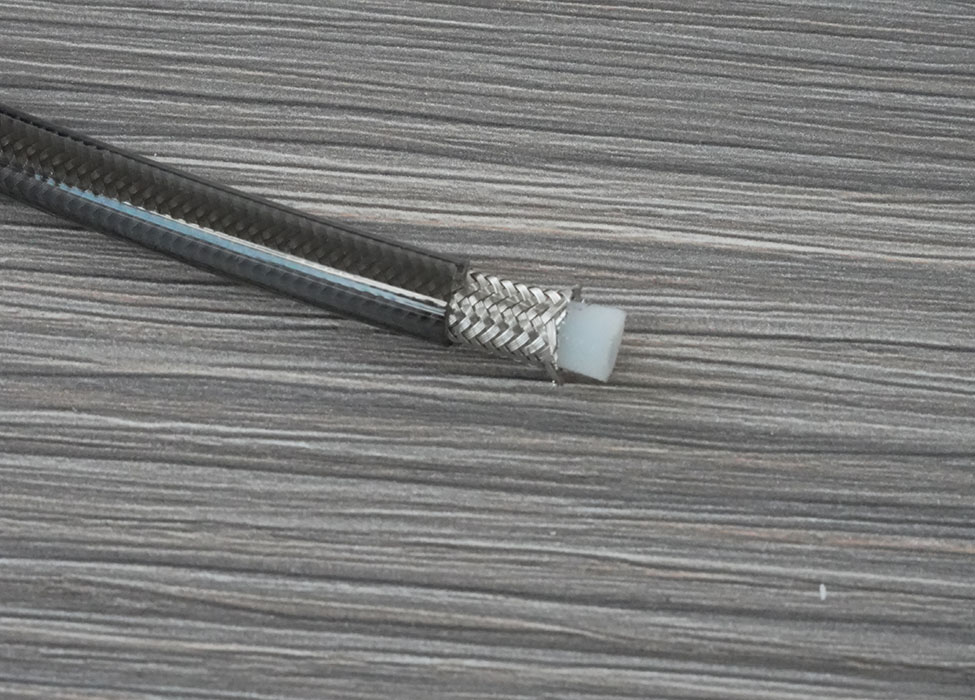
The inner core of a PTFE (polytetrafluoroethylene) brake hose is a smooth, dimensionally stable tube that resists chemical attack from DOT-class fluids and minimizes volumetric expansion under pressure. Compared with elastomeric liners, PTFE demonstrates near-zero permeability to brake fluid and negligible plasticization over time. For buyers searching for PTFE brake hose or Teflon brake hose, this characteristic is the primary technical differentiator.
Stainless braid: radial restraint and mechanical protection
How the braid contributes
Tightly woven stainless steel braid constrains radial growth of the liner during pressure transients and provides abrasion protection. Braid metallurgy (grade and wire diameter), weave angle and braid coverage directly influence burst pressure and impulse life — these are key items in any braided brake hose specifications request.
Outer jacket options
Functional and cosmetic roles
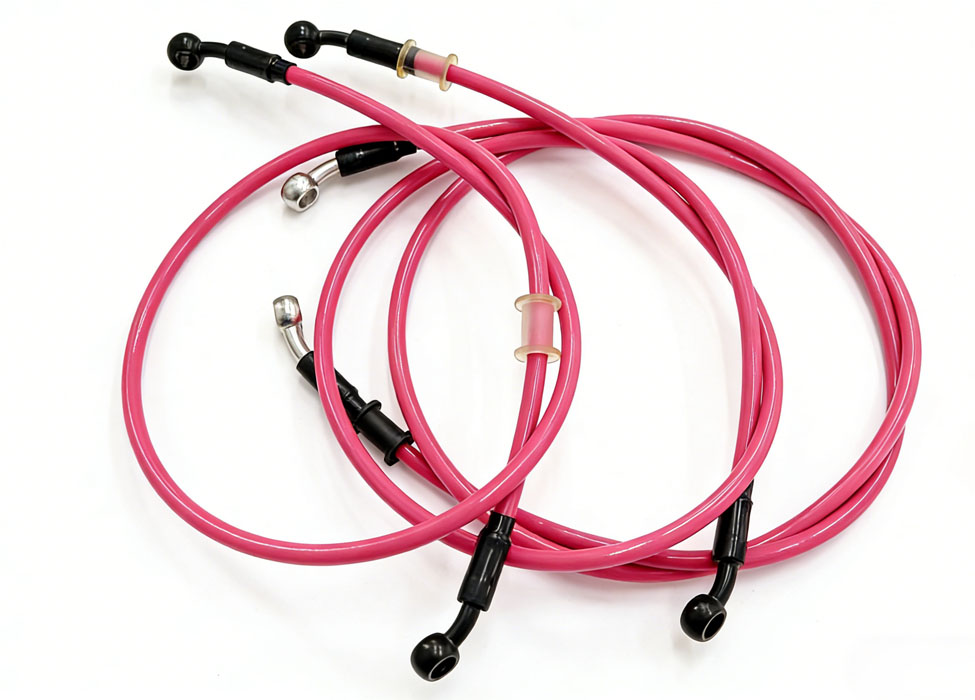
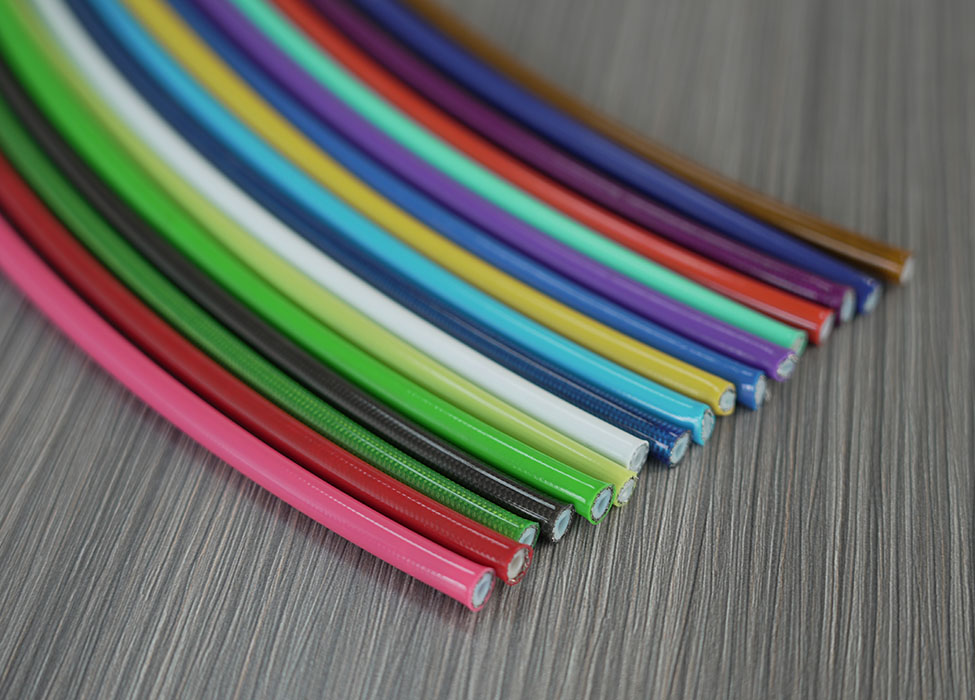
Outer jackets (PVC, nylon sleeve or painted braid) do not change hydraulic performance materially but add abrasion resistance, UV protection and aesthetic customization. For motorcycle brake hose kits, colored jackets are a common buyer request; for fleet applications prioritize jackets with salt-spray or UV test data.
Performance advantages over rubber hoses
Reduced hydraulic compliance — measurable pedal/lever benefit
Mechanics of improved actuation
Hydraulic compliance is the displacement lost to component deformation. Under high brake pressures, rubber hoses expand radially and absorb a fraction of master cylinder stroke, producing a softer or inconsistent pedal. PTFE liners constrained by stainless braid show negligible radial expansion, so a greater percentage of hydraulic displacement reaches the caliper. In application this delivers a firmer, more repeatable pedal or lever feel — important for both track use and heavy-duty service.
Thermal and chemical stability
Consistent response across cycles
PTFE retains dimensional and chemical stability across a wide temperature range and is resistant to hydrolysis and brake fluid attack that degrade many elastomers. The combined PTFE + braid system maintains consistent performance under repeated thermal cycling, improving modulation and reducing fade due to hose compliance changes.
Durability and lifecycle economics
Total cost considerations
Although unit price for a PTFE stainless-braided assembly is higher than a rubber hose, reduced replacement frequency and lower warranty claims can reduce total cost of ownership for fleets and resellers. Specification of impulse life and batch test data helps quantify lifecycle advantages.
Specification checklist for procurement teams
Hydraulic and dimensional data (must-have)
Items to include in RFQs
- Nominal inner diameter (ID) — match master cylinder/caliper hydraulic volume.
- Working pressure & burst pressure tables — by AN/ID size with stated safety factors.
- Minimum bend radius & length tolerance — to prevent PTFE core kinking.
- Impulse (cyclic) test results — batch certificates showing cycles to failure at defined conditions.
Fittings, termination and materials
Fitment requirements
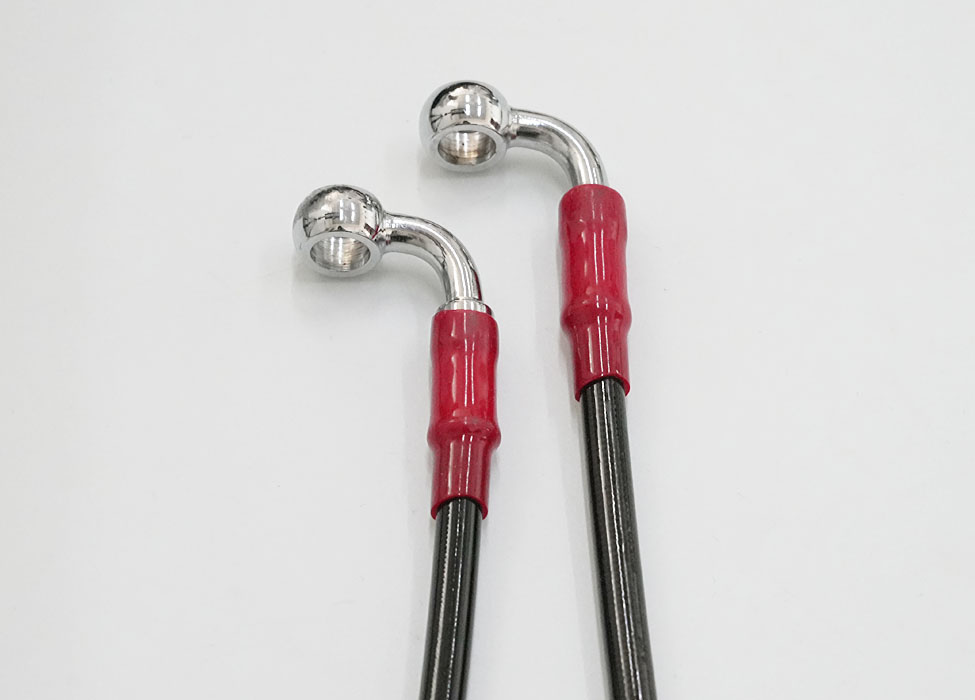
Specify fitting type (banjo, AN, OEM), material pairing (stainless to stainless preferred) and crush washer spec. Demand documented crimp tooling calibration or factory crimp certification — termination quality is a leading field failure cause.
Quality assurance and traceability
Acceptance documents
Require batch pressure test certificates, material traceability (raw material mill certs), and pre-shipment test records. For buyers searching “buy PTFE brake lines” or vetting a brake hose manufacturer, these documents should be mandatory in the purchase order.
Installation and maintenance — engineer checklist
Routing and mechanical protection
Best practices
Route hoses with smooth radii, secure intermediate clamps to prevent free-span vibration, and add anti-chafe sleeves at contact points. Maintain clearance from exhausts or apply thermal shielding where proximity is unavoidable.
Torque control, bleeding and validation
On-vehicle checks
Use calibrated torque wrenches and supplier torque tables for banjo bolts/unions; always replace crush washers. After fitting, replace brake fluid to the correct DOT grade and perform a staged bleed. Document pedal/lever travel and force during post-installation validation.
Conclusion
From an engineering perspective, PTFE (Teflon) stainless-braided brake hoses deliver measurable improvements in actuation fidelity, thermal/chemical stability and lifecycle economics versus conventional rubber hoses. For distributors and procurement teams, focus RFQs on ID matching, working/burst/impulse data, certified terminations and traceability to realize reliable, high-performance supply. Proper specification and installation turn the theoretical advantages of PTFE brake hose systems into consistent field performance and higher customer satisfaction.
Brake Line Brake Line User Experience
After replacing the AnTu brake oil pipe, the driving safety is directly upgraded! The virtual position and hysteresis of the original rubber tube have completely disappeared, the foot feel is solid and precise, and the braking force is responsive to stepping on it. Even when running continuously on mountain roads, there is no attenuation in braking. The anti-corrosion and scratch resistant characteristics allow me to no longer worry about oil pipe aging and leakage. This upgrade is worth it, strongly recommended for car enthusiasts who pursue handling and safety!
Don't worry about using the Antu brake oil pipe!
I used to worry about the aging and leakage of the oil pipe, but after replacing the AnTu brake oil pipe, I completely feel at ease! Fast brake response, short pedal travel, no thermal degradation during continuous downhill braking, corrosion and scratch resistance, almost no maintenance required for daily use, dual improvement in safety and handling, highly recommended!
The AnTu brake oil pipe is my best modification!
As a mountain running enthusiast, changing the AnTu brake oil pipe was my best modification! The original rubber oil pipe is prone to expansion at high temperatures, and the foot feels increasingly soft after continuous braking, always afraid of not being able to stop. The new oil pipe completely solves this problem. The pedal is solid without any virtual position, the braking force transmission is zero loss, the foot feel is still stable after high-intensity braking, the joint is tightly sealed, and there has been no oil leakage for two years. This durability is too worry free, and car enthusiasts who pursue safety and handling should close their eyes!
Antu brake oil pipe is too surprising!
Antu brake oil pipe is absolutely amazing! The pedal feel is firm and precise, offering smooth braking for light inputs and powerful braking for heavy inputs. It remains stable even under high-intensity braking during track days, with exceptional durability. No need to hesitate if you're demanding on your brakes!