Working principle of brake lines
Working principle of brake lines
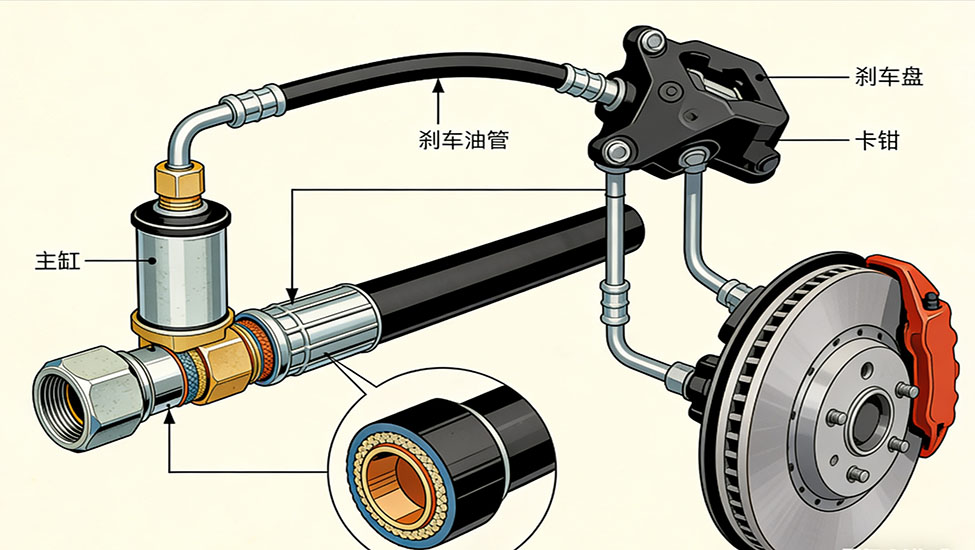
The working principle of brake lines is based on hydraulic transmission. When the driver presses the brake pedal, the piston in the master cylinder is pushed, causing the brake fluid to generate high pressure. This pressure is transmitted through the brake lines to the brake calipers or drum brakes at each wheel, pushing the pistons to clamp the brake discs or drums, thereby generating friction to slow down or stop the vehicle.
The key points are as follows:
1. Pressure Transmission: The brake lines, as a closed channel, transmit the pressure generated by the master cylinder to each wheel without loss.
2. Anti-Expansion Capacity: High-quality brake lines (such as steel braided lines) hardly expand under high pressure, ensuring a firm feel on the brake pedal and fast braking response.
3. High Temperature and Corrosion Resistance: The brake fluid temperature rises during high-intensity braking; the lines must be able to withstand high temperatures and prevent corrosion to ensure system stability.
4. Sealing: The lines must maintain a good seal to prevent brake fluid leakage, otherwise, brake failure may occur.
 2025-12-26