Recent News
-
 2025-12-26
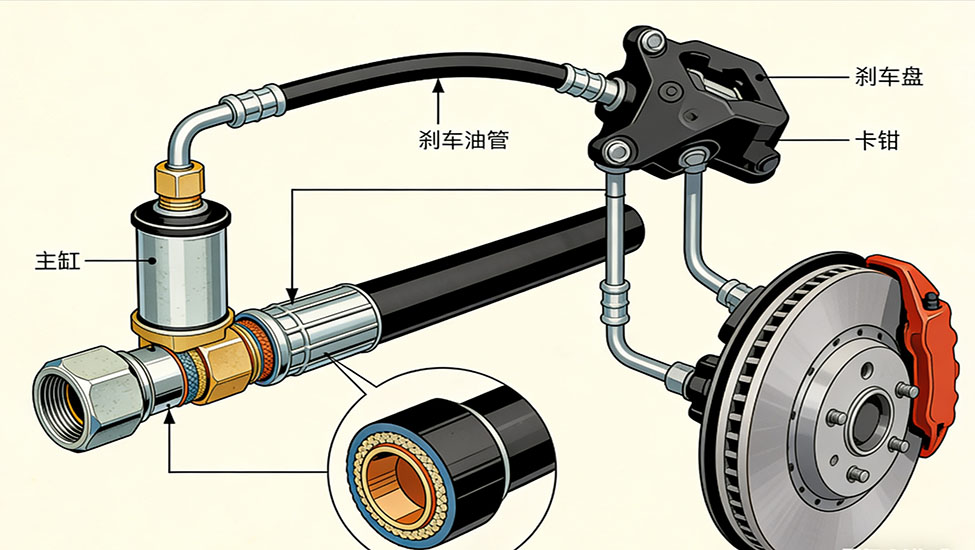
Working principle of brake lines

A brake caliper that cannot release completely is a common problem found in motorcycles, cars and modified performance vehicles. When the brake caliper remains partially engaged after braking, it can cause excessive heat, uneven brake pad wear, poor acceleration and reduced driving safety.
For riders, repair shops and brake system distributors, understanding the signs of a sticking brake caliper can help identify problems early and prevent expensive brake system damage.
During normal braking operation, hydraulic pressure pushes the brake pads against the brake disc. After releasing the brake lever or pedal, the pressure should return and the brake pads should move away from the disc.
When the brake caliper cannot release, the brake pads continue touching the disc, creating continuous friction even when braking is not applied.
One of the most common signs is abnormal heat around the wheel or brake disc after normal driving.
If one wheel is much hotter than the others, the brake caliper may be staying engaged due to hydraulic pressure problems or mechanical issues.
Continuous friction between brake pads and discs generates excessive heat, which may create a burning smell after driving.
This situation should not be ignored because long-term overheating can damage brake discs and other components.
When the brake remains partially applied, the engine needs to overcome additional resistance.
Drivers may notice slower acceleration or increased fuel consumption.
A hydraulic system problem may prevent pressure from releasing correctly, causing the brake pedal or motorcycle brake lever to feel abnormal.
A damaged brake hose is one of the most overlooked causes of brake caliper sticking.
When the inner layer of the hose deteriorates, it may create a restricted passage. Brake fluid can enter the caliper during braking but cannot return smoothly after releasing the brake.
This trapped pressure keeps the brake pads contacting the disc.
For replacement applications, our Rubber Brake Line Assemblyprovides reliable hydraulic performance and supports customized specifications.
Brake fluid absorbs moisture over time. Contaminated fluid can cause corrosion inside the hydraulic system and affect brake piston movement.
Regular brake fluid replacement helps maintain stable hydraulic pressure.
The brake piston may fail to return because of:
Improper hose routing, twisting or excessive bending may affect internal fluid flow and create abnormal pressure conditions.
For modified motorcycles and performance vehicles, brake hose quality directly affects hydraulic response.
A high-quality brake hose should maintain stable dimensions under pressure, resist temperature changes and provide consistent brake fluid transmission.
PTFE material is widely used in performance brake systems because of its excellent chemical resistance and temperature stability.
Our Teflon Brake Lineis suitable for motorcycles, racing vehicles and customized brake systems requiring reliable performance.
For distributors and OEM customers, complete assemblies are often required with specific fittings, lengths and connection designs.
Our PTFE Brake Line Assemblysupports customized production according to drawings and samples.
Many performance users choose reinforced structures such as Stainlesssteelbraided Hoseand Braided Brake linesto improve pressure stability.
Compared with standard hoses, reinforced brake lines can reduce expansion under high pressure and provide a more direct braking feeling.
After driving, compare brake temperatures between wheels. A significantly hotter wheel may indicate brake drag.
Check the brake hose carefully for:
Professional technicians can check whether brake pressure releases correctly after braking.
When selecting brake hoses for modified vehicles, consider:
We manufacture customized brake hose solutions for motorcycles, cars, racing vehicles and modified brake systems.
Customers can provide drawings, samples or technical requirements. Our engineering team can help select suitable materials, fittings and structures.
Contact usfor professional brake hose manufacturing support.
Brake hoses should be inspected regularly. Replacement is recommended when cracks, swelling, leakage or braking performance problems appear.
High-quality modified brake hoses can improve hydraulic stability, reduce hose expansion and provide more consistent braking performance.
Brake hose specifications must match vehicle requirements, brake pressure and installation conditions. OEM customization is recommended for special applications.
