Recent News
-
 2025-12-26
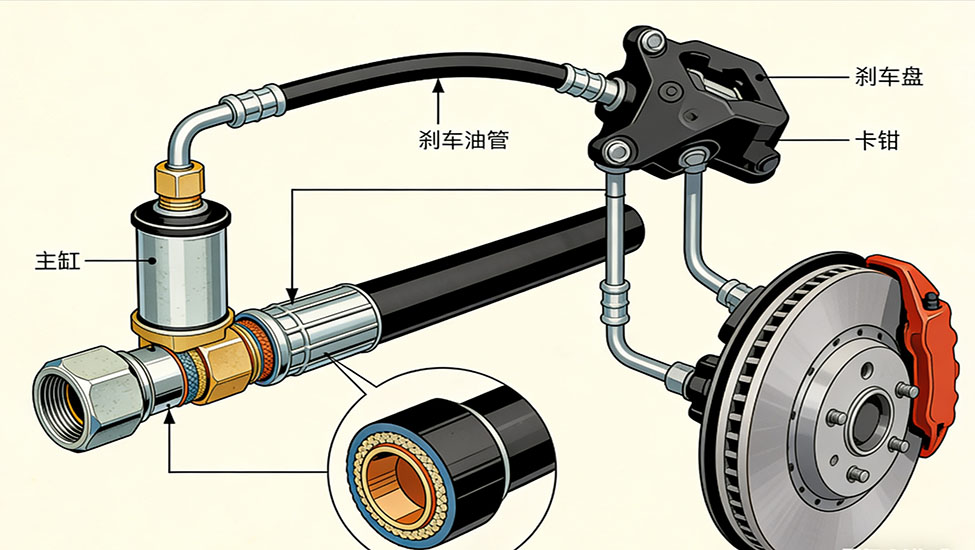
Working principle of brake lines

Stainless steel braided brake lines are widely used in motorcycle upgrades, modified vehicles, racing applications, and high-performance brake systems because of their excellent pressure stability and durability.
However, even premium braided brake hoses can experience performance problems if they are installed or maintained incorrectly. Many brake hose failures are not caused by the product itself, but by improper installation, unsuitable cleaning methods, or lack of regular inspection.
For vehicle owners, modification workshops, and brake hose distributors, understanding common maintenance mistakes can help improve safety and extend the service life of brake hoses.
A brake hose works under high hydraulic pressure every time the brake pedal or lever is applied. During operation, it experiences pressure changes, vibration, heat cycles, and environmental exposure.
Proper maintenance helps ensure that the brake hose continues to provide stable hydraulic transmission and reliable braking performance.
One of the most common mistakes is incorrect installation after upgrading or replacing brake components.
A brake hose should be installed naturally without unnecessary stress. Twisting or stretching the hose can affect internal structure and reduce service life.
Many vehicle owners clean their brake components regularly but ignore whether the cleaning products are suitable for brake hose materials.
Strong chemicals may damage protective layers, rubber components, or surface coatings over time.
Although stainless steel braided brake hoses have strong protection, the outer layer should still be inspected regularly.
External damage may expose the hose to moisture, dirt, and mechanical impact.
Brake fluid plays an important role in the entire hydraulic brake system.
Old brake fluid can absorb moisture, which may reduce braking performance and accelerate corrosion inside the brake system.
Different vehicles and applications require different brake hose materials. Selecting the wrong material may affect durability and performance.
Teflon Brake Lineis designed for applications requiring high temperature resistance, chemical stability, and reliable hydraulic performance.
It is commonly used in performance motorcycles, modified vehicles, and professional brake upgrades.
If you have technical drawings, samples, or special requirements, our engineers can help develop a suitable brake hose solution.
Nylon Brake Lineoffers a lightweight and flexible solution for different hydraulic applications.
It is often selected for projects requiring good flexibility and customized production.
PTFE Brake Line Assemblycombines PTFE tubing and professional fittings to provide stable brake hose performance.
Nylon Brake Line Assemblyprovides customized assembly options for OEM customers and aftermarket applications.
Rubber Brake Line Assemblyremains a practical choice for standard vehicle applications because of its flexibility and cost efficiency.
High humidity, rain, and frequent motorcycle usage make corrosion prevention especially important.
Regular cleaning and checking fittings can help maintain reliable performance.
High temperatures can increase stress on brake components. Customers should pay attention to heat exposure and installation conditions.
Precision and reliability are key concerns. Proper installation and regular inspection help maintain consistent braking performance.
Dust, rough roads, and different driving environments require regular inspection of brake hose protection and fittings.
Whenever customers upgrade wheels, brake calipers, suspension systems, or handlebars, brake hose compatibility should be checked.
We manufacture customized brake hose solutions for global distributors, motorcycle modification brands, repair workshops, and OEM customers.
Our factory provides customized brake hose manufacturing based on customer drawings, samples, vehicle models, colors, fittings, and technical requirements.
From prototype development to mass production, we focus on stable quality control and reliable brake hose solutions.
Regular inspection is recommended, especially for modified motorcycles, racing vehicles, and vehicles used in harsh environments.
Yes. Incorrect installation, chemical damage, and poor inspection habits can reduce brake hose service life.
High-quality braided brake lines can reduce hose expansion and provide more consistent hydraulic response.
Brake hoses should match vehicle specifications. Professional customization is recommended for modified applications.
