How to Choose the Right Motorcycle Brake Hose Length and Fittings
Choosing the correct motorcycle brake hose length and fittings is essential for safe installation, reliable hydraulic performance, and long-term durability. Whether replacing an original brake hose or developing a custom aftermarket brake line, the hose must match the motorcycle's routing, connection specifications, operating conditions, and braking system requirements.
For motorcycle parts distributors, importers, repair workshops, and OEM buyers, understanding brake hose dimensions and fitting compatibility can help reduce installation problems, product returns, and unnecessary inventory costs. This guide explains the key factors to consider when selecting motorcycle brake hoses and custom brake line assemblies.
1. Why Motorcycle Brake Hose Length Matters
Brake hose length affects installation, routing, and clearance around the motorcycle. A hose that is too short may become stretched when the handlebars turn or the suspension moves. A hose that is too long may form excessive loops or contact the tire, frame, fork, exhaust, or other components.
Problems Caused by an Incorrect Brake Hose Length
- Excessive tension: A short hose may place unwanted loads on the fittings and connection points.
- Incorrect bending: A poorly sized hose may bend more sharply than permitted by the manufacturer's specifications.
- Component interference: An excessively long hose may rub against moving or hot components.
- Installation difficulty: Incorrect dimensions can make the assembly difficult to route through the original guides and brackets.
- Premature wear: Continuous abrasion, twisting, or repeated contact can damage the hose and its protective covering.
How to Determine the Correct Brake Hose Length
Start with the motorcycle manufacturer's specified hose dimensions whenever available. If developing a custom assembly, document the original routing and identify the connection points before taking measurements.
Important Measurement Considerations
- Identify the exact starting and ending points of the assembly.
- Confirm whether the specified length is measured overall or between defined fitting reference points.
- Record the fitting angles and orientation at both ends.
- Account for the routing path and original retaining brackets.
- Verify clearance during full steering movement and the applicable suspension travel.
Measurement methods can differ between manufacturers and fitting designs. Always define the measurement reference points clearly so that the supplier and buyer are working from the same specification.
2. How to Select the Correct Motorcycle Brake Hose Fittings
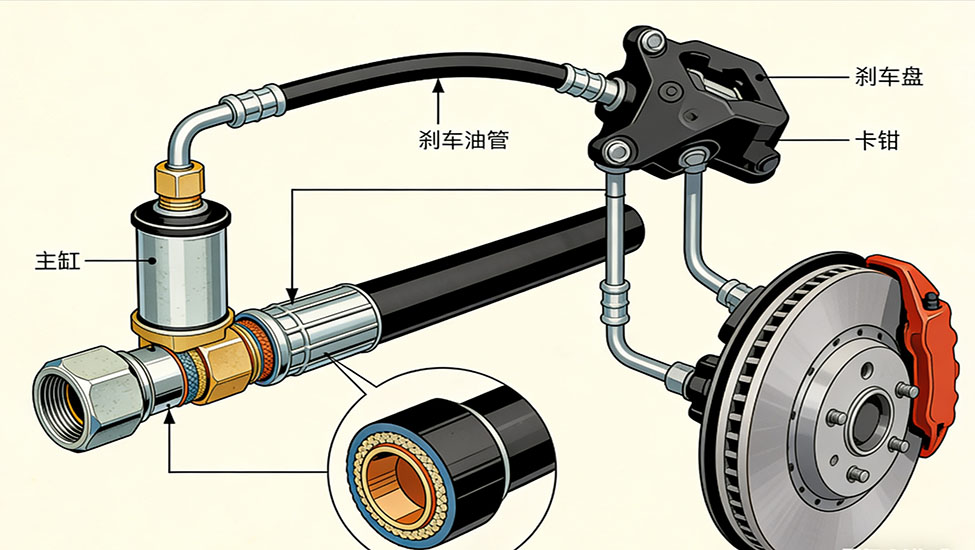
Brake hose fittings connect the hose assembly to the master cylinder, brake caliper, ABS unit, or other specified hydraulic components. A fitting that looks similar to the original may still have a different thread, sealing method, or dimensional specification.
Check the Thread Standard and Size
Verify the thread diameter, pitch, thread form, and connection standard against the vehicle or component manufacturer's documentation. Do not identify a fitting by visual appearance alone.
For example, metric threads and other common thread standards may appear similar but are not necessarily interchangeable. Incorrect connections can damage threads, prevent proper sealing, or create a risk of fluid leakage.
Identify the Fitting Angle and Orientation
Straight, angled, and banjo-style fittings may be used in different brake system configurations. The required design depends on the original connection, available clearance, hose routing, and component position.
For custom motorcycle brake lines, fitting orientation should be specified before assembly. Incorrect orientation can cause the hose to twist or interfere with surrounding components.
Understand the Sealing Method
Brake hose connections may use sealing washers, flare seats, or other application-specific sealing arrangements. The replacement assembly must match the intended connection design.
Use the seals and installation torque specified by the vehicle or fitting manufacturer. Reusing damaged sealing components or combining incompatible fitting designs can lead to leakage.
3. Choosing Between Rubber, PTFE, and Braided Brake Hoses
Brake hose material selection depends on the intended application, hydraulic pressure, temperature, brake fluid compatibility, flexibility, and required mechanical protection. No single construction is automatically the best choice for every motorcycle.
Rubber Brake Line Assembly
A Rubber Brake Line Assembly is commonly used in original-equipment braking systems and replacement applications. A suitable rubber hose can provide the flexibility and performance required by its specified design.
When selecting a replacement, confirm that the hose meets the vehicle manufacturer's requirements for dimensions, pressure, temperature, fluid compatibility, and durability.
PTFE Brake Line Assembly
A PTFE Brake Line Assembly uses a polytetrafluoroethylene liner in a complete hose assembly designed for the intended braking application. PTFE can provide useful chemical and temperature resistance within its specified operating limits.
However, the liner alone does not determine whether the finished assembly is suitable for braking service. Reinforcement, fittings, seals, crimping, and validation are also critical.
Teflon Brake Line
Teflon Brake Line is a common search term associated with certain PTFE-lined brake hose products. Buyers should verify the actual liner material and complete assembly specification rather than relying solely on product naming.
Stainless Steel Braided Brake Lines
Stainless Steel Braided Brake Lines use a metal reinforcement layer around a compatible inner hose construction. When correctly engineered, the reinforcement can help control hose expansion under hydraulic pressure and provide additional mechanical protection.
The quality of the complete assembly depends on the liner, braid construction, fittings, crimping process, and final testing. A stainless steel outer braid does not eliminate the need for proper routing and regular inspection.
Nylon Brake Line Assembly
A Nylon Brake Line Assembly should only be selected when the complete product has been specifically engineered, tested, and approved for the intended hydraulic brake application.
Ordinary nylon tubing used for air, fuel, or general fluid transfer must not be assumed suitable for motorcycle braking systems. Always verify pressure capability, fluid compatibility, temperature limits, fitting design, and applicable safety requirements.
4. How to Choose Brake Hoses for Different Motorcycle Applications
Motorcycles differ in chassis design, suspension travel, brake configuration, and operating conditions. A suitable brake hose specification should reflect the vehicle's actual requirements.
Street Motorcycles
For standard street motorcycles, prioritize vehicle compatibility, correct routing, appropriate flexibility, and compliance with the original braking system requirements. Replacement hoses should match the specified fittings and dimensions.
Modified and Performance Motorcycles
Modified motorcycles may require different hose lengths or fitting angles because of changes to handlebars, forks, brake calipers, or other components. A custom assembly should be designed around the modified configuration rather than copied without verification from an unrelated model.
Properly engineered braided brake lines may be considered for compatible performance applications. Any modification must preserve safe routing, sufficient clearance, and the required hydraulic performance.
Scooters and ATVs
Scooters and all-terrain vehicles may have different routing constraints, environmental exposure, and packaging requirements. ATV applications can involve mud, dust, vibration, and contact with obstacles, making appropriate protection and secure routing particularly important.
Hose selection should account for the vehicle's specified pressure requirements, suspension movement, mounting points, and environmental conditions.
5. Common Mistakes When Ordering Custom Motorcycle Brake Lines
Providing Only the Overall Hose Length
Length alone is not a complete specification. Buyers should also provide fitting type, thread details, end orientation, sealing method, and the measurement reference points.
Assuming Similar Fittings Are Interchangeable
Connections that appear similar may have different thread pitches or sealing surfaces. Confirm every connection against technical documentation or a verified sample before production.
Choosing Materials Based Only on Price
The lowest-priced hose may not meet the required pressure, temperature, durability, or compatibility requirements. Evaluate the complete assembly specification, quality controls, and relevant validation documents before comparing quotations.
Ignoring the Installation Environment
A hose designed for one routing configuration may not be suitable for a modified motorcycle with different handlebars, suspension components, or calipers. Confirm the actual installation conditions before approving the final dimensions.
Skipping Sample Verification
For new OEM or aftermarket projects, checking a sample against the technical drawing and intended vehicle can help identify dimensional and fitting issues before mass production. Final approval should also consider the applicable testing and compliance requirements.
6. What Motorcycle Brake Hose Manufacturers Need From OEM Buyers
Accurate specifications help manufacturers produce consistent custom brake hose assemblies for motorcycle parts importers, wholesalers, repair networks, and aftermarket brands.
Technical Information for a Brake Hose Quotation
- Motorcycle make, model, year, and intended application
- Original hose reference or approved technical drawing
- Required hose length and measurement method
- Fitting type, thread standard, and end orientation
- Required hose construction and protective covering
- Operating pressure and temperature requirements
- Specified brake fluid compatibility
- Quantity, packaging, marking, and documentation requirements
For OEM development, both parties should agree on the drawings, materials, dimensional tolerances, inspection criteria, and validation plan before production. Clear specifications can reduce communication errors and help maintain consistent product quality across repeat orders.
7. Frequently Asked Questions About Motorcycle Brake Hose Length and Fittings
How Do I Measure a Motorcycle Brake Hose Correctly?
Use the manufacturer's specified measurement method or a clearly defined reference between the fitting connection points. Record the fitting angles and routing requirements, and verify clearance throughout the permitted steering and suspension movement.
Can I Use a Longer Brake Hose on a Modified Motorcycle?
A different length may be required after modifications, but the hose must be correctly specified and routed. Excess length must not create loops, abrasion, or contact with moving or hot components.
Can I Reuse the Original Brake Hose Fittings?
Reuse depends on the fitting design and manufacturer instructions. Some assemblies use permanent crimped connections that require replacement of the complete assembly rather than disassembly and reuse. Never reuse components that are damaged or specified as single-use.
Are Braided Brake Lines Suitable for Every Motorcycle?
No. The assembly must match the motorcycle's connections, hydraulic requirements, routing, and applicable regulations. Confirm compatibility before purchasing or installing an aftermarket brake line.
What Is the Most Important Information for a Custom Brake Hose Order?
The most important details include the intended vehicle application, defined hose length, fitting specifications, end orientation, hose construction, operating requirements, and any applicable compliance documentation.
Conclusion
Choosing the correct motorcycle brake hose length and fittings requires careful attention to dimensions, thread standards, sealing methods, material construction, and installation clearance. Accurate specifications help ensure compatibility and reduce avoidable problems during installation and use.
For motorcycle parts distributors and OEM buyers, working with a qualified brake hose manufacturer and verifying samples before production can support more consistent sourcing. Whether selecting a rubber replacement hose, a PTFE brake line assembly, or stainless steel braided brake lines, the complete assembly must be designed and validated for its intended braking application.