How to Choose the Right Stainless Steel Braided Brake Lines for a Motorcycle
For a motorcycle brake hose replacement or modification, choosing the correct stainless steel braided brake line requires more than selecting the right hose diameter. The complete assembly needs to match the motorcycle, brake caliper, master cylinder and routing.
This is particularly important when changing handlebars, installing aftermarket brake calipers or master cylinders, modifying suspension components or developing a custom brake line kit.
Why Are Stainless Steel Braided Brake Lines Popular for Motorcycle Modifications?
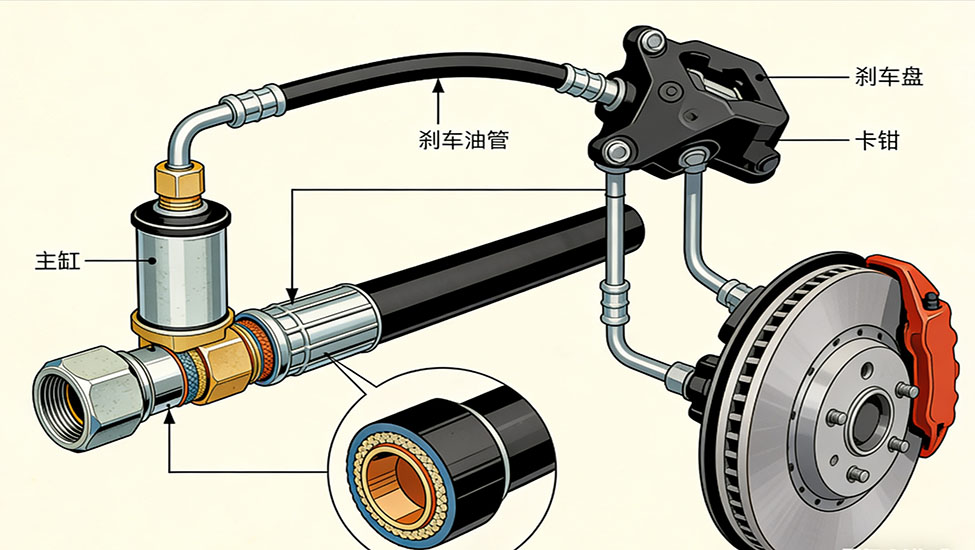
A braided brake line normally consists of an inner fluid-carrying tube and an external reinforcement layer. Stainless steel wire is commonly used as the reinforcement for performance-oriented applications.
The reinforcement helps control radial expansion when hydraulic pressure rises. Compared with some conventional flexible hose constructions, this can contribute to a firmer and more consistent lever response.
The actual braking result still depends on the complete hydraulic system and correct installation.
Step 1: Identify the Motorcycle and Brake System
Before ordering a custom brake line, identify the motorcycle model, year and brake configuration.
Useful information includes:
- Motorcycle make and model
- Model year
- Front or rear brake application
- Master cylinder type
- Caliper type
- Original hose length
- Fitting specifications
For aftermarket projects, photographs can also help the manufacturer understand the installation environment.
Step 2: Choose the Inner Hose Material
PTFE Brake Line
PTFE is commonly used in performance-oriented hydraulic hose construction. It provides a chemically resistant inner tube and is frequently combined with stainless steel reinforcement.
Our Teflon Brake Line is designed for customers looking for a PTFE-based brake hose solution.
Nylon Brake Line
Nylon provides another option for brake hose applications. Depending on the design, it can provide a useful balance between flexibility, weight and cost.
Our Nylon Brake Line can be considered for applications requiring nylon hose construction.
Rubber Brake Hose
Rubber remains widely used for conventional brake hose applications. Its flexibility makes it suitable for many original equipment and replacement applications.
Step 3: Measure the Brake Line Correctly
Do not simply copy the length printed on an old hose. Measure the actual routing and connection points.
Check Full Steering Movement
On motorcycles, turn the handlebars from full left to full right and check the hose position. The hose should not become stretched, kinked or trapped.
Check Suspension Movement
Front suspension movement can change the distance between the caliper and the fixed frame or fork area. This should be considered when selecting the final hose length.
Step 4: Select the Correct Fittings
The fitting is just as important as the hose itself.
Thread Specification
Confirm the thread diameter and pitch rather than relying on visual comparison.
Banjo Angle
Different motorcycles may require different banjo angles because of the position of the caliper and master cylinder.
Fitting Orientation
For custom assemblies, fitting orientation should be defined before crimping. This is especially important when the hose needs to follow a specific routing path.
Step 5: Decide Between a Bulk Brake Line and a Finished Assembly
Some manufacturers and distributors purchase hose material separately, while aftermarket brands often require complete assemblies ready for installation.
Our PTFE Brake Line Assembly is intended for customers who need finished PTFE brake hose assemblies with specified fittings and dimensions.
For nylon-based finished hose applications, the Nylon Brake Line Assembly provides another configuration for customized projects.
Stainless Steel Braided Hose Buying Checklist
Material
Confirm the inner tube and reinforcement materials.
Dimensions
Confirm inside diameter, outside diameter and finished length where applicable.
Fittings
Confirm thread, pitch, banjo size, angle and orientation.
Application
Make sure the hose is intended for the pressure, temperature, brake fluid and installation conditions of the vehicle.
Sample
For custom projects, approve a sample before moving to mass production.
Packaging
For overseas distribution, confirm packaging, labeling and individual product identification requirements in advance.
Common Problems Caused by Incorrect Brake Hose Selection
- Hose too short after steering or suspension movement
- Incorrect thread specification
- Wrong banjo angle
- Hose twisting during installation
- Hose rubbing against the frame or wheel
- Incorrect brake fluid compatibility
- Fitting orientation not matching the original routing
These problems are usually easier to prevent during product development than to correct after a batch has already been produced.
Maintenance of Motorcycle Braided Brake Lines
Inspect the Braid
Look for broken wires, corrosion, abrasion or damage caused by contact with surrounding components.
Inspect the Fittings
Check for leakage, damaged threads or movement around the connection point.
Check Routing After Maintenance
If the handlebar, fork, caliper or other brake components are changed, check the brake hose routing again.
Do Not Ignore Visible Damage
A damaged brake hose should be replaced promptly. Brake components should not be treated as ordinary decorative aftermarket parts.
FAQ About Motorcycle Braided Brake Lines
How long do motorcycle braided brake lines last?
There is no fixed service life that applies to every hose. Material, age, operating environment, installation and maintenance all affect service life. Regular inspection is recommended.
Do braided brake lines make a motorcycle stop faster?
Not necessarily. A reinforced hose can reduce hose expansion compared with some conventional constructions and may provide a firmer control feel. Stopping distance depends on the complete braking system, tires, road surface and rider input.
Are braided brake lines suitable for all motorcycles?
No. The correct hose length, fittings, thread, routing and brake system specifications must be confirmed for the motorcycle.
Can a manufacturer make a motorcycle brake line from a sample?
Yes. A sample, drawing or detailed photographs with dimensions can be used to develop a customized brake line.
Our Main Brake Hose Product Range
- Teflon Brake Line
- Nylon Brake Line
- PTFE Brake Line Assembly
- Nylon Brake Line Assembly
- Rubber Brake Line Assembly
- Stainlesssteelbraided Hose
- Braided Brake lines
Developing a Custom Motorcycle Brake Line?
If you are developing motorcycle brake lines for an aftermarket brand, distributor or parts business, you can send us a drawing, sample, dimensions or photographs of the original hose.
We can discuss the hose material, fitting configuration, length and assembly requirements before production.
Send us your drawing or sample and contact us for a customized brake line