How to Identify Brake Line Leakage Before It Becomes a Safety Issue
Brake line leakage is not always obvious at the beginning. In many cases, the vehicle still brakes, but the pedal feel changes, fluid level drops slowly, or a fitting becomes damp after repeated use. For engineers and procurement teams, early identification is important because small leaks can lead to unstable braking, premature wear, and full system failure if ignored.
Typical Leak Locations
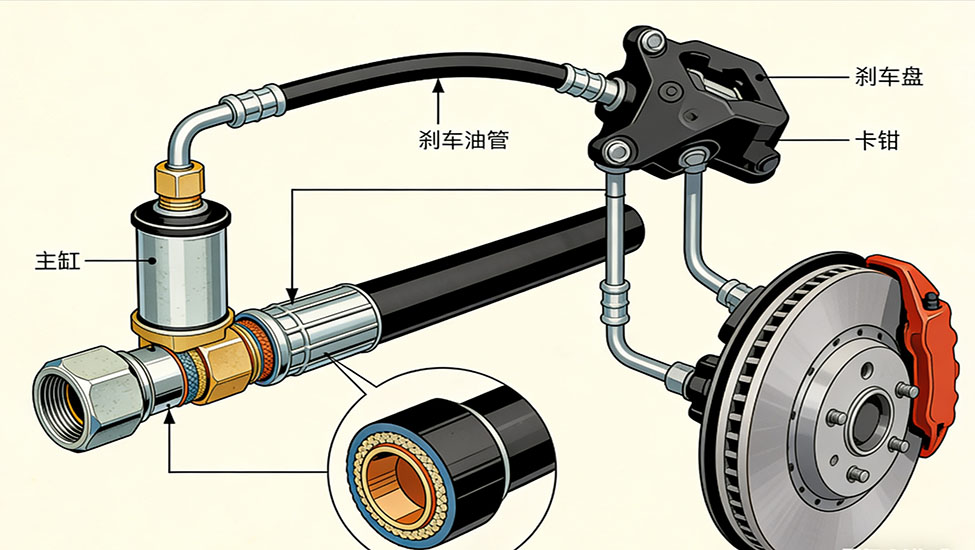
Hose end connections
Leaks often occur where the hose connects to the caliper, master cylinder, or hard line. These points must maintain a tight seal under pressure and vibration.
Crimped joint areas
On assembled brake hoses, the crimp zone is a key structural point. If the crimp is inconsistent or the material is damaged, seepage can start under load.
Steel line corrosion points
Rigid brake lines may leak where rust weakens the tube wall. This is common in areas exposed to moisture, road salt, or poor underbody protection.
Rubber surface damage
A hose that is rubbed, twisted, overheated, or aged beyond service life may begin to leak even if no obvious split is visible at first.
Product Pages Related to Leak Resistance and Replacement
Buyers often evaluate several line styles during replacement projects. The following product pages are commonly matched with leakage-related searches:
- Green Hydraulic Brake Line for custom styling and easy product recognition.
- Pink Hydraulic Brake Line for special aftermarket builds and appearance-driven projects.
- Blue Hydraulic Brake Line for performance applications and product differentiation.
- Silver Hydraulic Brake Line for a clean, technical look and wide compatibility.
- Black Hydraulic Brake Line for OEM-style replacement and neutral appearance.
How a Technician Can Confirm the Problem
Check the fluid reservoir first
If the brake fluid level is lower than expected, leak inspection should begin immediately. A slow drop is often the first measurable sign.
Inspect after braking pressure is applied
Some leaks only show under load. The line and fitting should be observed during pedal application, not just while parked.
Look for contamination around the leak area
Brake fluid can attract dust and leave a sticky residue. That residue often marks the exact location of the fault.
What Buyers Should Pay Attention To
Pressure stability
A replacement brake line must hold pressure consistently without expansion, seepage, or connection loosening.
Compatibility
Check end type, length, routing angle, and installation space before ordering. Wrong fitment causes poor sealing and short service life.
Material selection
For hot and humid regions, material stability matters more than appearance. A good-looking hose that cannot resist heat and vibration is not a reliable solution.
Maintenance Advice for Long Service Life
Use clean brake fluid, inspect hose routing during every service, and replace hoses before visible deterioration becomes severe. Avoid sharp bends, clamp damage, and contact with hot components.
Main Products
Our main product range includes Blue Hydraulic Brake Line, Green Hydraulic Brake Line, Pink Hydraulic Brake Line, Red Hydraulic Brake Line, Silver Hydraulic Brake Line, Black Hydraulic Brake Line, and Motorcycle Brake Lines.
FAQ
How often should brake hoses be replaced?
There is no fixed interval for every vehicle. Replacement depends on mileage, climate, age, and hose condition. Any sign of leakage should be treated as an immediate repair issue.
Does upgrading the hose improve safety?
Yes, when the correct product is chosen. Better hose construction can improve pressure transfer and reduce the chance of seepage or instability.
Is this suitable for motorcycles and cars?
Yes, but the product specification must match the vehicle category. Motorcycle Brake Lines require special attention to steering movement and routing clearance.
Custom Order Support
If you have samples, drawings, or a custom specification, send them to us for technical review and matching support.
Contact Us for OEM inquiry, samples, and quotation support.