Symptoms of Collapsed Brake Hose: Early Warning Signs Every Vehicle Owner Should Know
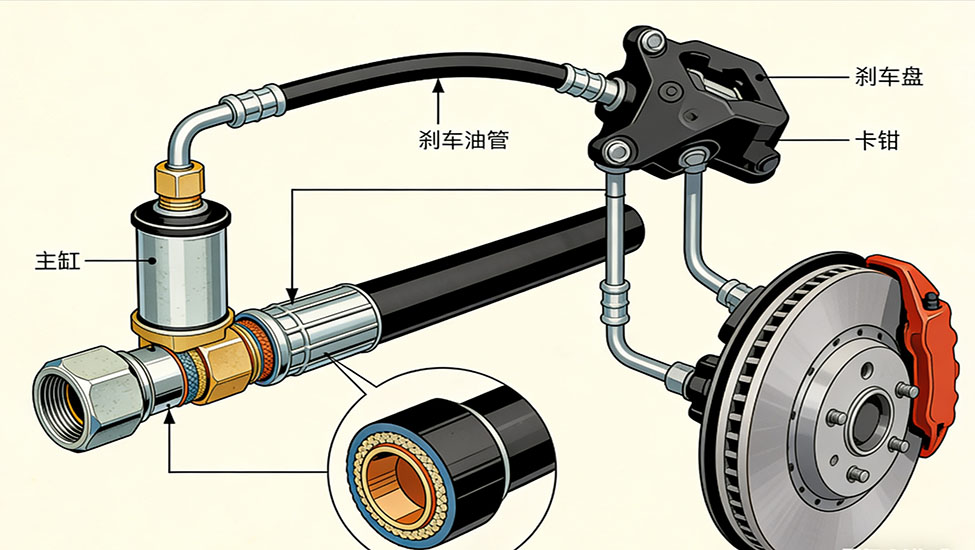
In hydraulic braking systems, the brake hose plays a key role in transferring pressure from the master cylinder to the caliper. When a brake hose begins to collapse internally, fluid flow becomes restricted and braking performance can change noticeably. In many cases, the outer surface still looks normal, which makes the problem difficult to detect without experience.
Typical Symptoms of a Collapsed Brake Hose
1. Brake Drag After Releasing the Pedal
One of the most common symptoms is brake drag. After releasing the brake pedal, the caliper may not release fully because fluid cannot return quickly through the hose.
2. Uneven Brake Temperature
When a hose collapses internally, one wheel may run hotter than the others. This happens because residual pressure remains in the brake line.
3. Soft or Delayed Brake Response
A partially blocked hose may cause delayed pressure transfer, resulting in a soft pedal or inconsistent braking feel.
Common Causes of Brake Hose Collapse
Material Aging
Traditional rubber hoses gradually deteriorate due to heat, brake fluid contamination, and environmental exposure.
Internal Layer Separation
Over time, the inner lining may separate from the hose body, causing a restriction in the fluid path.
Excessive Heat Exposure
Vehicles operating in hot climates or heavy traffic conditions may experience accelerated hose degradation.
Related Brake Hose Products
Modern performance brake systems often use more durable materials to reduce the risk of hose collapse. Examples include:
Teflon Brake Line,Nylon Brake Line,PTFE Brake Line Assembly,Nylon Brake Line Assembly,Rubber Brake Line Assembly
Why Performance Brake Lines Are Preferred
Compared with traditional hoses, products such as Stainlesssteelbraided Hose and Braided Brake lines provide stronger pressure resistance and more stable braking performance.
Things Overseas Buyers Pay Attention To
- Stable brake pressure under high temperature conditions
- Resistance to corrosion and environmental exposure
- Compatibility with different vehicle models
- Durability during long-term heavy use
Daily Maintenance Suggestions
- Inspect brake hoses during routine brake service
- Replace brake fluid according to manufacturer recommendations
- Check for cracks, swelling, or stiffness in hoses
- Avoid excessive bending during installation
Our Main Brake Hose Products
We specialize in manufacturing high-quality hydraulic brake hoses including Teflon Brake Line, Nylon Brake Line, PTFE Brake Line Assembly, Nylon Brake Line Assembly, Rubber Brake Line Assembly, Stainlesssteelbraided Hose and Braided Brake lines for global aftermarket applications.
Need Custom Brake Hose Solutions?
If you have technical drawings, special sizes, or vehicle specifications, our engineering team can help design the right brake hose assembly for your project.
FAQ
How often should brake hoses be replaced?
Brake hoses should typically be inspected every service interval and replaced when signs of aging or damage appear.
Do upgraded brake hoses improve safety?
High-quality braided or PTFE brake hoses can improve pressure stability and provide more consistent braking performance.
Are performance brake hoses suitable for all vehicles?
Most vehicles can use upgraded hoses, but correct length, fittings, and routing must be verified.